Cars With Ventilated Seats: Cooling Comfort Feature Guide
Published: Sept 21, 2026
Stepping into a parked car after hours under the blazing sun can turn an everyday journey into an uncomfortable experience. Hot upholstery traps heat directly against your back and legs, making cabin cooling feel slow. Modern automotive seating technology changes daily travel. Cars with ventilated seats solve this problem by actively drawing heat away from your body. By circulating air through tiny perforations in the upholstery, this comfort feature ensures immediate relief from heat and humidity.
What are Ventilated Seats?
Ventilated seats are an advanced automotive comfort feature designed to maintain airflow between the passenger and the seat cushion.
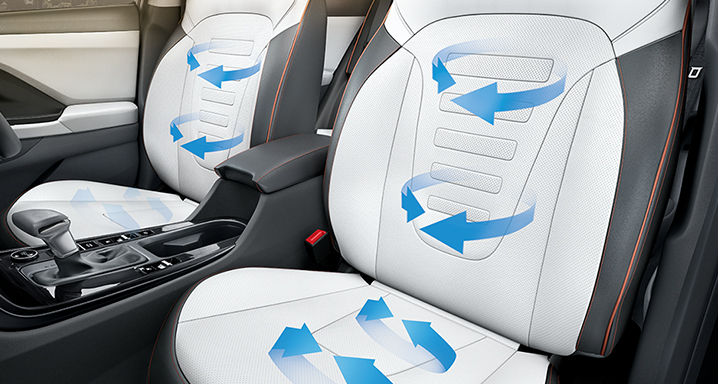
Instead of relying solely on the cabin air conditioning to lower interior temperatures, ventilated seating targets the contact points directly. Small electric fans embedded within the seat structure push or pull air through perforated leatherette or fabric covers. This continuous airflow prevents sweat buildup, keeps clothing dry and maintains a balanced body temperature throughout short city trips or long highway journeys.
How Ventilated Seats Work
The system relies on internal fans, airflow channels and perforated upholstery to deliver targeted cooling.
Integrated fans located inside the seat backrest and bottom cushion draw air from the lower cabin area. This air passes through engineered channels before exiting through thousands of micro-perforations in the seat material. Most systems offer multiple speed settings, letting occupants adjust airflow intensity based on current weather conditions.
● Integrated electric fans pull cool cabin air through internal seat channels.
● Micro-perforations in the seat cover distribute air evenly across your back and thighs.
● Multiple speed settings let you customise airflow for different weather conditions.
Knowing the basic mechanics makes choosing between different seat heating and cooling technologies simple.
Ventilated Seats vs Heated Seats: What's the Difference
While both systems enhance seating comfort, they serve opposite climate needs.
| Feature | Ventilated Seats | Heated Seats |
|---|---|---|
| Primary Purpose | Cooling and moisture reduction | Warming the body in cold weather |
| Mechanism | Electric fans circulating air through perforations | Embedded electrical heating elements |
| Ideal Climate | Hot, humid Indian summers | Cold winters and chilly mornings |
| Cabin AC Impact | Works alongside AC to speed cooling | Operates independently of cabin AC |
Understanding these functional differences helps buyers choose the right comfort features for local weather conditions.
Benefits of Ventilated Seats
Installing airflow systems inside car seats provides several practical advantages for daily vehicle ownership. Understanding these key benefits highlights why cooling seats have become a top priority for car buyers.
Comfort During Long Drives and Hot Weather
Continuous air circulation prevents body heat from building up between your back and the upholstery. This airflow keeps clothes dry and reduces fatigue during extended journeys in high temperatures.
● Prevents fabric dampness caused by trapped body heat and sweat.
● Reduces physical fatigue on extended road trips by regulating skin temperature.
Works Best With Air Conditioning
Ventilated seats pull air directly from the vehicle floor area, where cooled air collects. This speeds up personal cooling long before the entire cabin reaches the set temperature.
● Circulates pre-cooled air collected from lower cabin vents directly to the body.
● Delivers personal thermal relief faster than standard dashboard AC vents alone.
These combined advantages make ventilated seating a practical feature for tropical climates.
Hyundai Cars With Ventilated Seats
Hyundai offers front and rear ventilated seating setups across a wide selection of vehicles. Below are the primary models offering this cooling technology across various budgets and segments.
Hyundai VENUE
The Hyundai VENUE brings high-segment comfort to the compact SUV category. Its ventilated front seats ensure the driver and front passenger stay cool during busy city commutes.
● Available on top-tier trims paired with leatherette upholstery.
● Helps reduce cabin heat discomfort in dense urban traffic.
This feature gives compact SUV buyers high-end seating comfort without moving up to larger vehicles.
Hyundai CRETA
The Hyundai CRETA features multi-stage front ventilated seats designed for varied weather conditions. Occupants can adjust airflow levels using console-mounted buttons.
● Offers 3-stage control to customise air volume based on individual preference.
● Pairs with automatic climate control for balanced cabin cooling.
Customisable cooling levels make this setup ideal for long highway journeys.
Hyundai CRETA N Line
The CRETA N Line combines athletic styling with premium cabin features. Its front ventilated seats feature N Line badging and red accent stitching while maintaining high cooling performance.
● Sport-styled front seats with integrated cooling channels.
● Keeps occupants cool during active driving and long road trips.
Sporty design elements paired with functional cooling deliver performance and relaxation.
Hyundai VERNA
The Hyundai VERNA features both ventilated and heated front seats, making it prepared for all seasons. The system provides fast relief during intense summer months and warmth during cold winter mornings.
● First-in-segment combination of front seat cooling and heating functions.
● Controlled through a dynamic, switchable infotainment interface.
Dual-function seating ensures complete temperature control year-round.
Hyundai ALCAZAR
Designed for family travel, the Hyundai ALCAZAR extends cooling comfort beyond the front row. 6-seater variants offer second-row captain seats with dedicated ventilation controls.
● Front and second-row captain seats feature independent ventilation controls.
● Provides equal cooling comfort for both front and rear passengers.
Rear-seat cooling ensures every family member enjoys equal comfort during long journeys.
Hyundai CRETA Electric
The Hyundai CRETA Electric integrates front ventilated seats into its energy-efficient cabin. Localised seat cooling reduces demand on the main air conditioning compressor, preserving battery range.
● Localised seat cooling lowers reliance on maximum climate control settings.
● Complements high efficiency while maintaining passenger comfort.
Efficient seat ventilation supports overall battery range by reducing climate-control energy use.
Hyundai IONIQ 5
The flagship Hyundai IONIQ 5 features eco-processed leather seats equipped with multi-stage ventilation. The front premium relaxation seats recline to optimise weight distribution while maintaining continuous airflow.
● Premium relaxation seats with full recline and integrated cooling.
● Crafted using eco-friendly materials and energy-efficient fan motors.
Advanced seat ergonomics combined with gentle airflow create a luxurious lounge experience.
How to Use Ventilated Seats Correctly
Operating seat cooling systems properly ensures maximum efficiency and long component life.
● Turn on the main cabin air conditioning for a few minutes before activating the seat fans so cool air can flow through the cushions.
● Avoid placing thick seat covers, blankets or non-perforated cushions over ventilated seats, as these block airflow ports.
● Clean the seat perforations periodically using a soft vacuum attachment to prevent dust and debris from clogging internal fan vents.
Following these basic steps helps ensure consistent cooling performance for years.
Conclusion
Cars with ventilated seats offer an effective solution to intense summer heat and high humidity. By circulating air directly through seat perforations, this feature eliminates trapped body heat and keeps occupants fresh throughout every trip. Hyundai provides extensive access to this cooling technology across compact SUVs, sedans, family 3-row vehicles and advanced electric models. Selecting a vehicle equipped with seat ventilation ensures every drive remains cool, relaxed and enjoyable.
Experience cool comfort on every drive by exploring the Hyundai lineup of vehicles with ventilated seats today. Visit your nearest authorised Hyundai dealership or book a test drive online.
FAQs
How long does it take for ventilated seats to cool down?
Ventilated seats provide noticeable airflow within seconds of activation. Cooling speeds up once the main cabin air conditioning lowers the temperature of the lower cabin air.
Are ventilated seats the same as air conditioning?
No, ventilated seats use internal fans to circulate existing cabin air through seat perforations, whereas air conditioning actively chills and dehumidifies incoming air.
What is the difference between ventilated and heated seats?
Ventilated seats use fans to move air through perforated covers to cool the body. Heated seats use electrical elements inside the cushion to generate warmth during cold weather.
Do ventilated seats work without the AC on?
Yes, ventilated seat fans operate independently of the air conditioner. However, turning on cabin AC produces significantly cooler airflow through the seat perforations.
Can ventilated seats damage the seat cover?
No, ventilated seats are factory-engineered with durable perforated leatherette or fabric designed to withstand regular fan airflow and daily passenger weight without causing damage.