

David de Rothschild on Rewilding Everyday Life
4 minute read
August 18, 2026
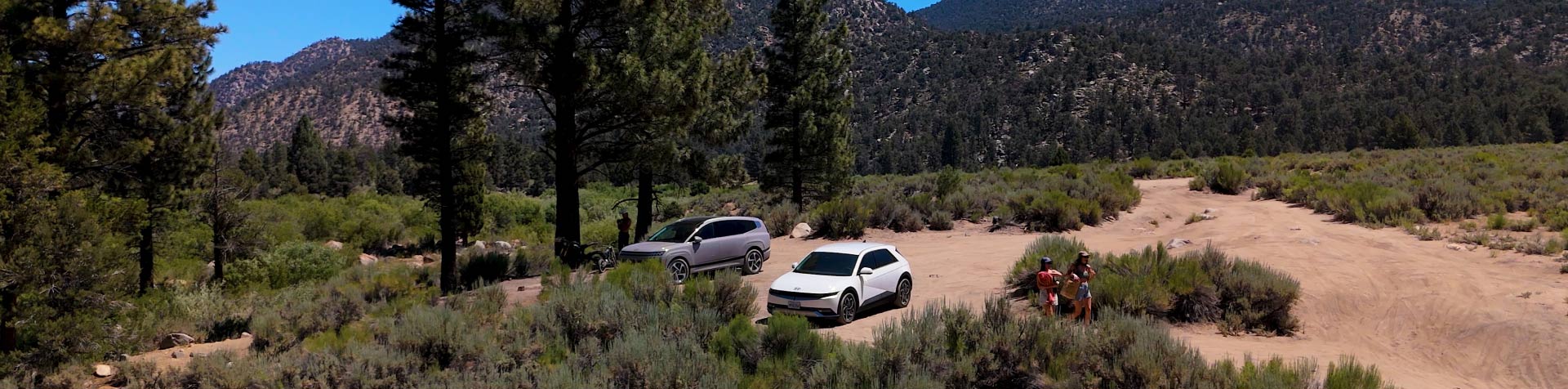
We’re pleased to share a special essay by environmentalist and explorer David de Rothschild. Inspired by the journey of Finnegan and Ansel, two ten-year-old boys who set off on a camping adventure with IONIQ, the essay reflects on our connection with the natural world.
Through the boys’ time spent freely exploring nature, David invites us to consider what we may have lost in an age of constant stimulation. Just as IONIQ brings the two young adventurers closer to nature, we hope this essay encourages a moment to pause and reconnect with the world around us.
In Praise of Being Bored
I had a realization recently.
I am terrible at being still.
I’ve spent the better part of two decades throwing myself at the far edges of the map. If
you’d asked me why, I’d have given you something noble about adventure and curiosity.
Then, somewhere out there, the weather would close in. There’d be nothing to do but
wait. Just be still. And those, it turns out, were the days that changed me. Not the flags.
Not the records. The boredom.
Because in the stillness, something came back online that modern life had quietly switched off. My attention. The plain animal ability to notice what’s in front of me.
We are, I think, the most stimulated generation that has ever drawn breath. There’s always a screen, a scroll, a ping, a next thing. And it feels like abundance. It feels like being alive.
But, overstimulation isn’t a full life; it’s a loud one. And a loud life is very good at hiding the fact that you’re not actually in it. That’s the quiet tragedy of it. We don’t lose our connection to the living world in some dramatic rupture. We lose it in a thousand small distractions, none of which felt like a loss at the time. We are, most of us, homesick for something we’re too busy to name.
Nature: The True Meaning of Connection
Here’s the word I want to say properly. Nature, with the capital N I still stubbornly give it, one of the last words we treat like Liberty or Justice or God.
We claim to adore it. And yet we so rarely go and actually meet it. Not as scenery, viewed through glass on the way to somewhere else, but up close, on its own terms, with our full and undivided attention.
This isn’t, in the end, a piece about saving anything. It’s a piece about belonging. Because we come most alive inside the things we feel a part of, and you cannot feel part of something you are never still enough to meet.
That, for me, is what connection really means. The felt, physical, slightly astonishing sense that you and the living world are not two separate things.
What Children Know About Connection: What We’ve Lost
Children still know how to meet it. Watch a small one in a garden and you’ll see the whole lost art intact:
forty unhurried minutes with a single woodlouse, no purpose, no output, nothing to post. They aren’t studying the creature. They’re with it.
In the unfilled space, the walk without headphones, the hour with no plan, the deliberate refusal to reach for the phone, that the world starts speaking to you again in its own language. Slowness makes you notice. Noticing makes you curious. And curiosity, that oldest and most human of instruments, turns out to be the thing that leads you all the way back to wonder.
Rewilding in Everyday Life
I’ve started calling it rewilding. Rewilding yourself. Letting the domesticated, over-scheduled, over-stimulated animal you’ve become remember it was ever wild at all. It’s a practice more than a place, which is why I keep pointing people toward the idea (rewildyourself.com).
You don’t need the ice sheet. You need the scrappy bit of woodland behind the supermarket, and the willingness to stand in it without a purpose. You feel it in the first ten minutes of a walk, the way the noise in your head drops half a register. That isn’t a wellness trend to be optimize. That’s an animal arriving home.
So, here’s my honest ask. Go somewhere near you. Somewhere unimpressive. Leave the phone in your pocket. Stay a little longer than is comfortable, long enough to get bored, and then stay through the boredom to whatever is waiting on the other side of it.
That’s the whole method. But it will slowly hand back the things the noise has been quietly taking: your attention, your curiosity, your capacity for wonder, and, more than any of them, a kind of quiet, ordinary joy that no screen has ever once delivered.
Be still. Be curious. Rewild.
The world is far stranger, far more alive, and far more ours than we’ve been letting ourselves see.
Follow @hyundai on Instagram to explore the story of Finnegan and Ansel, two ten-year-old boys whose camping adventure with IONIQ 9 became a journey of connection, curiosity, and adventure.