

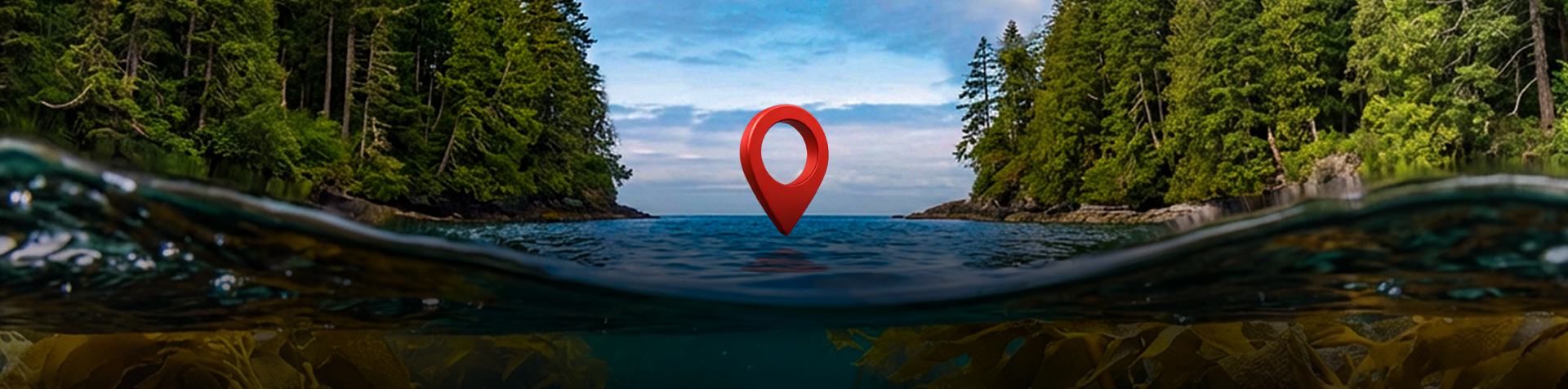
Forests Without Names:
Bringing light to the Sea Forests the World Overlooked, Until Now
5 minute read
April 03, 2026
Think of a land forest. Easy. the Amazon, the Black Forest… names surface without hesitation. But a Sea Forest? That one rarely comes to mind. Not because it’s worthless, but because it’s unseen, unnamed, and largely unprotected. And if we can’t even name and give identity to a forest, how can we ever hope to protect it? This Earth Month, Hyundai Motor Company is giving these underwater forests the recognition they’ve been missing.
Beneath the surface: The forests we rarely see
In a world where every inch of the planet is mapped, there are still forests without names. These forests don't appear on the maps, and we rarely mention them in textbooks. They have no signposts, no visitor centers, no postcards bearing their image. And yet, beneath the surface of our oceans, they breathe.
These are Sea Forests; vast underwater ecosystems made of kelp and seaweed that rise and sway like forests in the wind. They absorb carbon as much as land forests, filter pollutants, shelter marine life, and strengthen coastal resilience, and we are just beginning to understand how valuable they really are.
In a powerful acknowledgement of their role in mitigating climate change, in 2025, the Intergovernmental Panel on Climate Change (IPCC) formally recognized seaweed as a blue carbon sink. And yet, most of these Sea Forests still go unrecognized.
A name. A place. A reason to care.
Building on its Cannes Lions-winning 'Tree Correspondents' campaign, which gave voice to terrestrial forests, Hyundai now turns its attention below the surface. Hyundai’s new global initiative, 'Forests Without Names', expands the brand’s environmental commitment from land to sea, transforming the way we see, define, and ultimately value underwater ecosystems.
The idea is simple, but powerful: “give Sea Forests identities”. Because a name is more than a label. It's ‘recognition’. It establishes a point of reference in language, in law, and in collective memory. It's the first step toward protection, and the foundation upon which governance, research, and stewardship are built.
By collaborating with scientists, NGOs, government entities, and marine experts, Hyundai has identified significant Sea Forests around the world and gave them names for the very first time.
From Ulsan to the World: Where Hyundai’s Sea Forest mission begins
This journey began in Ulsan, Korea. Since 2023, Hyundai has committed to restoring sea forests in Ulsan in partnership with the Korean governments. One of the restored Sea Forests is expected to deliver an estimated *1,300 tons of carbon dioxide reduction, calculated based on an average annual absorption capacity of approximately 337 tons of CO₂ per square kilometer of Sea Forest.
*Source: Korea Fisheries Resources Agency (FIRA), estimated carbon absorption capacity of Sea Forests
Through this campaign, we officially named the sea forest located off the coast of Jujeon-dong, Dong-gu, Ulsan, “Ullim.”
'Ullim' conveys the dual meaning of “Ulsan’s New Forest” and the hope that the message of environmental protection will resonate more widely through the sea forest. The name has been officially registered on Kakao Map, making this the first case in which a sea forest has been given an official name and location and displayed on a major map service in Korea.
In addition, through collaboration with Ulleung County, the “Tonggumi Natural Sea Forest” was also registered on the map alongside the Ullim Sea Forest, further contributing to greater public awareness of sea forests.
*Source: Korea Fisheries Resources Agency (FIRA), estimated carbon absorption capacity of sea forests
A map of names expanding across the world
Half a world away in Argentina, under participation from a marine conservation NGO and local community groups, Hyundai introduced the name “Auken Aiken,” meaning “Field of Life” in an Indigenous language—a name that carries with it both ecological meaning and cultural memory.
And in Australia, the story becomes a shared one. A shortlist created with local NGOs and community members will soon open to public voting across Hyundai’s global channels, inviting people everywhere to help give this Sea Forest its name—and its place in the world.
Turning Stories Into Scientific Legacy
All of these Sea Forests will be documented on a dedicated website, ForestsWithoutNames.com, forming the foundation of a living global Sea Forest Map. Each site will include coordinates, ecological data, and narratives contributed by local organizations and communities.
The best part? All mapping data generated through ForestsWithoutNames.com will be formally transferred to the Global Collaborative Network ‘Kelp Forest Alliance’, ensuring that the project continues as a scientific and institutional resource. Public storytelling becomes something lasting—a tool for research, monitoring, and conservation planning.
Hyundai Motor Company has been committed to forest conservation across both terrestrial and marine ecosystems. Through the ‘Forests Without Names’ campaign, we are pleased to shed light on sea forests and highlight their ecological value and the importance of protecting our marine environments. We are especially proud to bring this story to life creatively—sparking curiosity about what has long gone unnoticed, and inspiring people to care about what they now know by name. We will continue to advance our sustainability efforts in pursuit of a more environmentally responsible future. Hyunchul Jeon, Head of Future Business & Sustainability Group at Hyundai Motor Company
From ocean waste to the open road
Hyundai’s broader ocean commitment goes beyond recognition and restoration. Through an ongoing partnership with Healthy Seas since 2021, Hyundai supports the recovery of discarded fishing nets and marine debris across 10 countries, collecting nearly 320 tons of waste to date. The recovered materials are then upcycled into ECONYL® regenerated nylon for use in select Hyundai vehicles. It’s a simple but powerful loop - turning ocean waste into valuable material and reinforcing Hyundai’s approach to circular, sustainable vision.
When recognition becomes protection
In the campaign’s teaser film, a voice rises from beneath the waves: “I am a forest. I make oxygen. I shelter life. But I do not have a name.”
A name doesn’t solve everything, but it creates clarity- a shared way for researchers, communities, and institutions to recognize and protect the same place. By bringing Sea Forests into our maps and our collective imagination, Hyundai shows that progress extends beneath the surface as well.
This Earth Month, the question is simple:
Are we ready to see them, know them, and finally call them by name?
Follow @hyundai for more updates.