Technology & Innovation [Inside HMG’s Digital R&D Revolution ③] 3D Printing: How Hyundai Motor and Kia Accelerate Product Development Through Additive Manufacturing
Please use Safari to download the files.
[Inside HMG’s Digital R&D Revolution ③] 3D Printing: How Hyundai Motor and Kia Accelerate Product Development Through Additive Manufacturing
Hyundai Motor and Kia are expanding design freedom beyond the constraints of conventional manufacturing through their commitment to engineering excellence. In Part 3 of our series, we step inside the Additive Manufacturing Solution Center (AMSC), where engineers are utilizing advanced industrial 3D printing to compress development timelines and print complex components from digital blueprints.
For decades, automotive design has been constrained by the limits of the factory floor. If a part could not be injection-molded, die-cast or carved from raw materials, it simply could not be built. Engineers had to compromise on components’ weight, geometry and performance to fit existing equipment and processes, as developing custom molds and machines would be too time-consuming and costly.
The Additive Manufacturing Solution Center (AMSC) at Hyundai Motor and Kia’s Namyang Research and Development (R&D) Center flips this paradigm. Here, components move directly from digital design to fabricated reality through a range of advanced additive manufacturing technologies — from laser-melted metals to powder-sintered polymers — with reduced tooling requirements and greater material flexibility. Engineers can design for optimal weight and performance and manufacture complex geometries that are difficult to achieve through conventional methods.
Traditional manufacturing relies on molds, dies and subtractive processes — shaping material by removing excess. This approach limits design flexibility, extends development timelines, and generates material waste.
In contrast, additive manufacturing (3D printing) involves precisely layering material to build the exact geometry specified in digital designs. For vehicle development, this enables rapid prototyping as well as complex geometries and weight optimization that are difficult to achieve through traditional methods.
The AMSC occupies a newly constructed facility within the Advanced Mobility Solutions building. The center was established nearly three decades after Hyundai Motor Group introduced its first industrial 3D printer in 1996, marking the Group’s first purpose-built facility dedicated to additive manufacturing research and production.
The AMSC operates a broad range of additive manufacturing technologies tailored to different materials, geometries and performance requirements. Depending on the application, engineers can utilize both polymer- and metal-based manufacturing processes to achieve production-grade performance and precision.
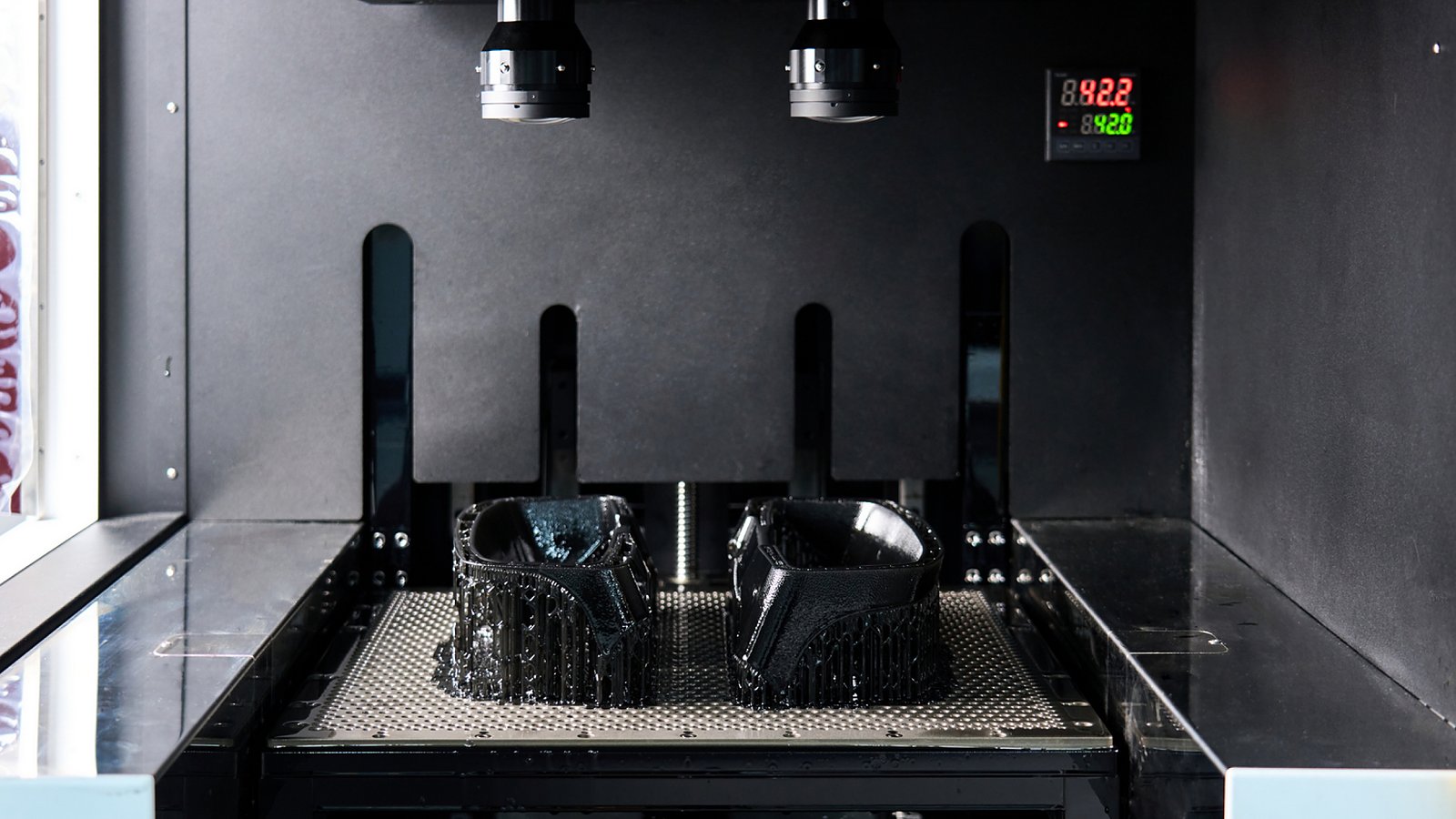
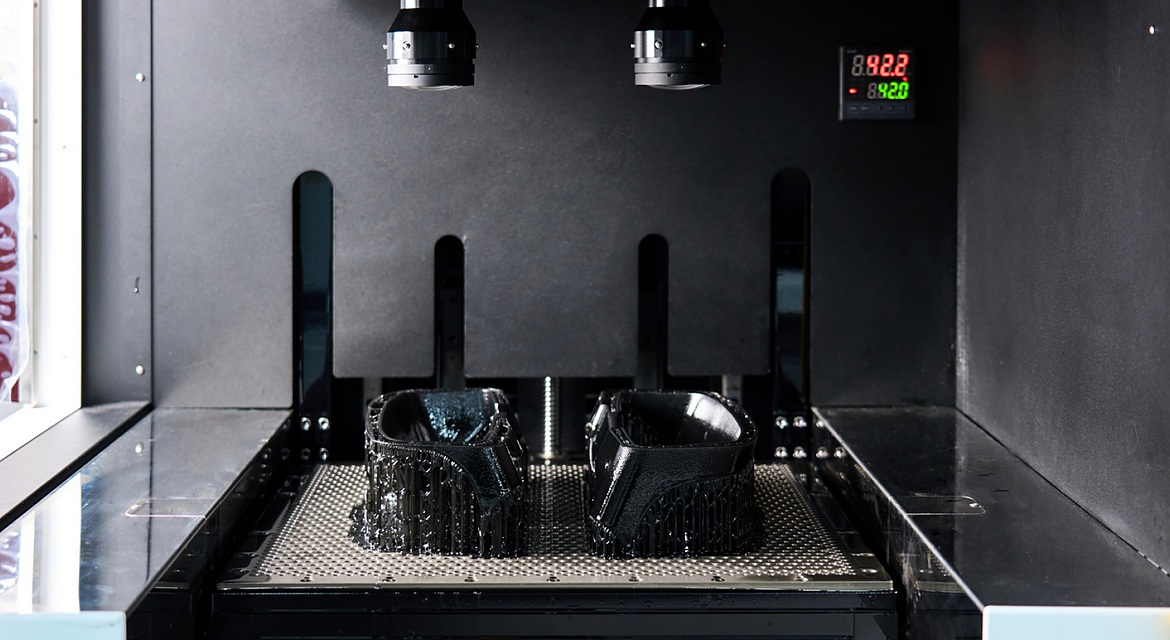
For polymer applications, the center employs Vat Photopolymerization technologies, including Digital Light Processing (DLP), which uses ultraviolet light to cure entire layers of resin simultaneously, and Stereolithography Apparatus (SLA), which traces intricate geometries with precision-guided lasers. These technologies are particularly well suited for highly detailed components used in design validation, prototype development and other applications requiring fine dimensional accuracy.
The center also operates Polymer Powder Bed Fusion (Polymer PBF) systems, which fuse powdered polymer materials layer by layer without requiring support structures. This minimizes material waste and post-processing requirements. After vapor-smoothing treatment, components can achieve surface finishes comparable to injection-molded parts, making the technology suitable for high-quality customized and development components.
For metal applications, Metal Powder Bed Fusion (Metal PBF) systems use high-energy lasers to melt metal powders into highly complex geometries. The process provides the dimensional accuracy and mechanical performance required for advanced vehicle components while enabling designs that would be difficult to achieve through casting, stamping or machining.
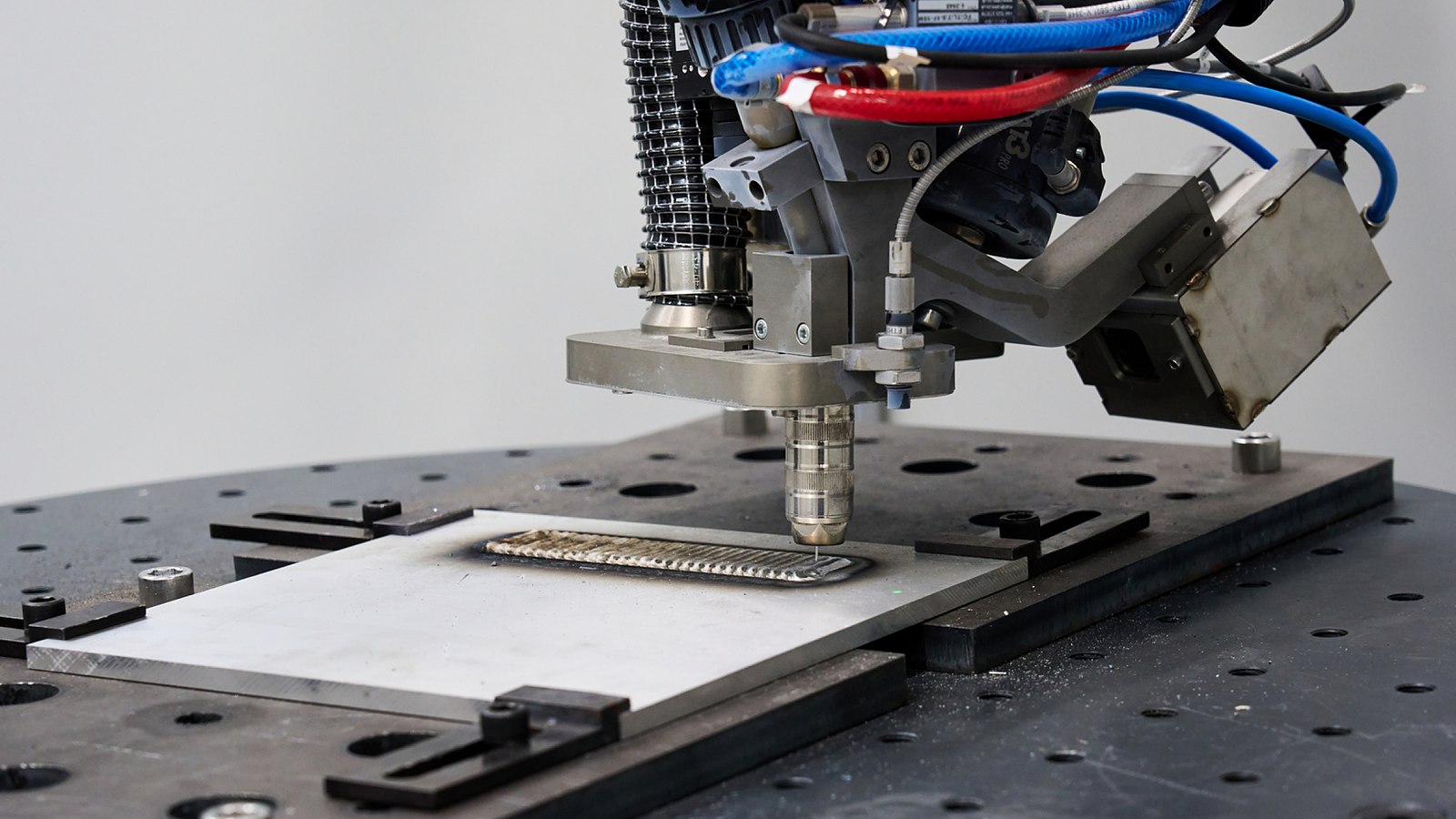
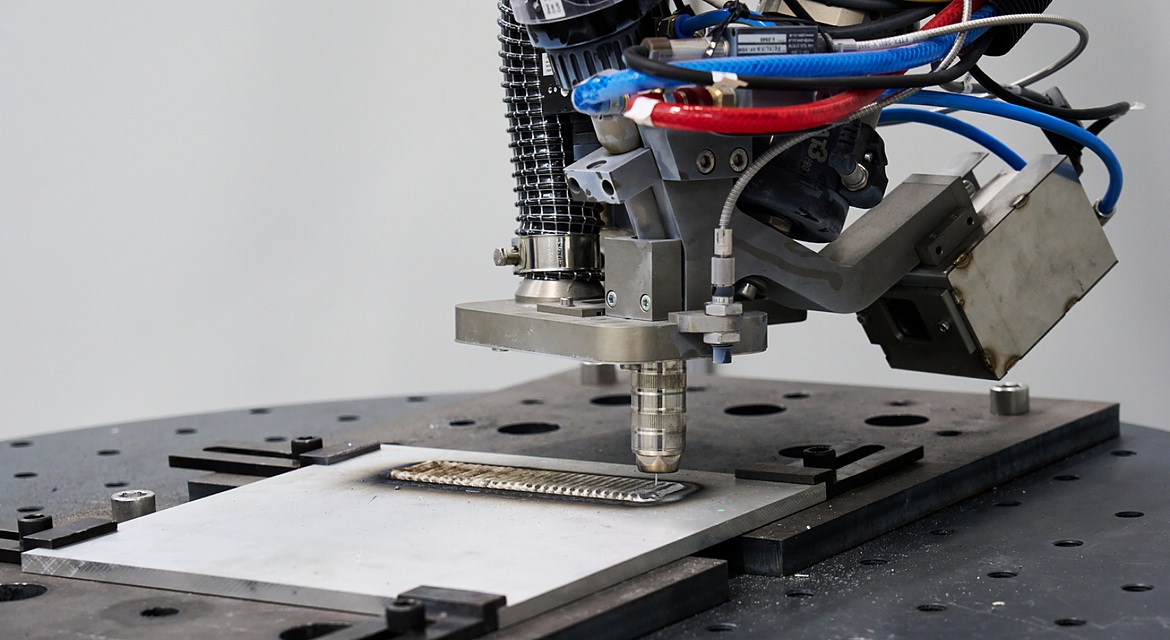
The AMSC also utilizes Directed Energy Deposition (DED) technologies for larger-scale metal components. One example is DED-Wire Arc Additive Manufacturing (DED-WAAM), which uses welding-arc technology to deposit metal layer by layer. Compatible with materials including steel, stainless steel, aluminum and titanium, the process is particularly effective for producing large structural components that would be difficult to manufacture as a single piece using conventional methods.
Beyond operating advanced equipment, the AMSC is advancing Design for Additive Manufacturing (DfAM) capabilities. Engineers optimize components specifically for additive production, enabling part consolidation, advanced lattice structures and lightweight geometries that improve efficiency while maintaining strength.

Every fabricated component undergoes rigorous validation in the Quality Inspection Cell, where dimensional measurements, tensile strength, bending stiffness and impact resistance are evaluated against production-equivalent standards. In-house material verification and metallurgical analysis further help ensure that additive-manufactured parts meet the same quality expectations as conventionally produced components.
Additive manufacturing supports a growing range of applications across Hyundai Motor and Kia, from vehicle development and heritage restoration to motorsports and manufacturing operations.
In vehicle development, the technology enables rapid production of prototypes, development components, manufacturing jigs and fixtures, and service parts for discontinued vehicles or emergency replacement needs where conventional tooling would be impractical or time-intensive.
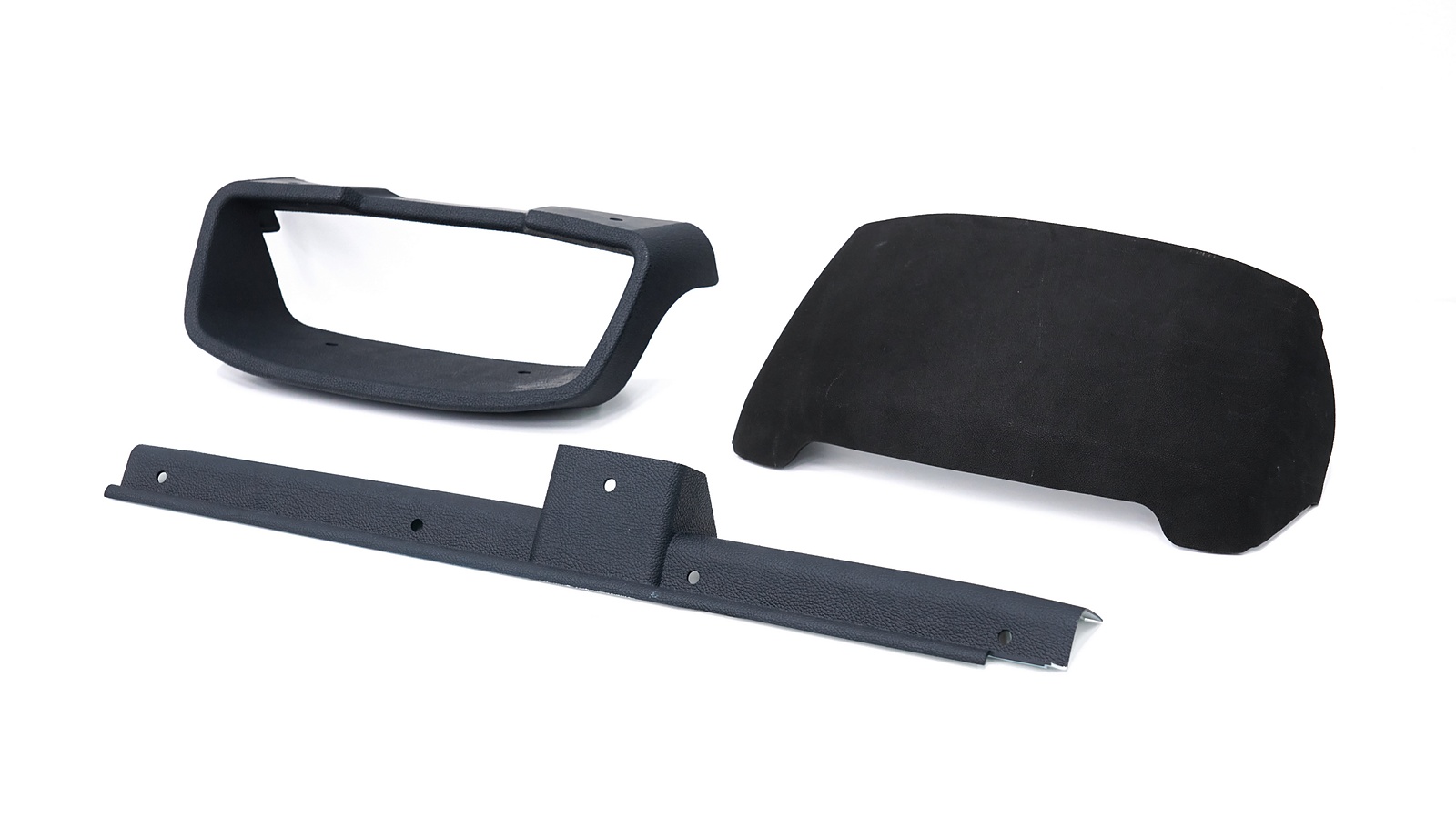
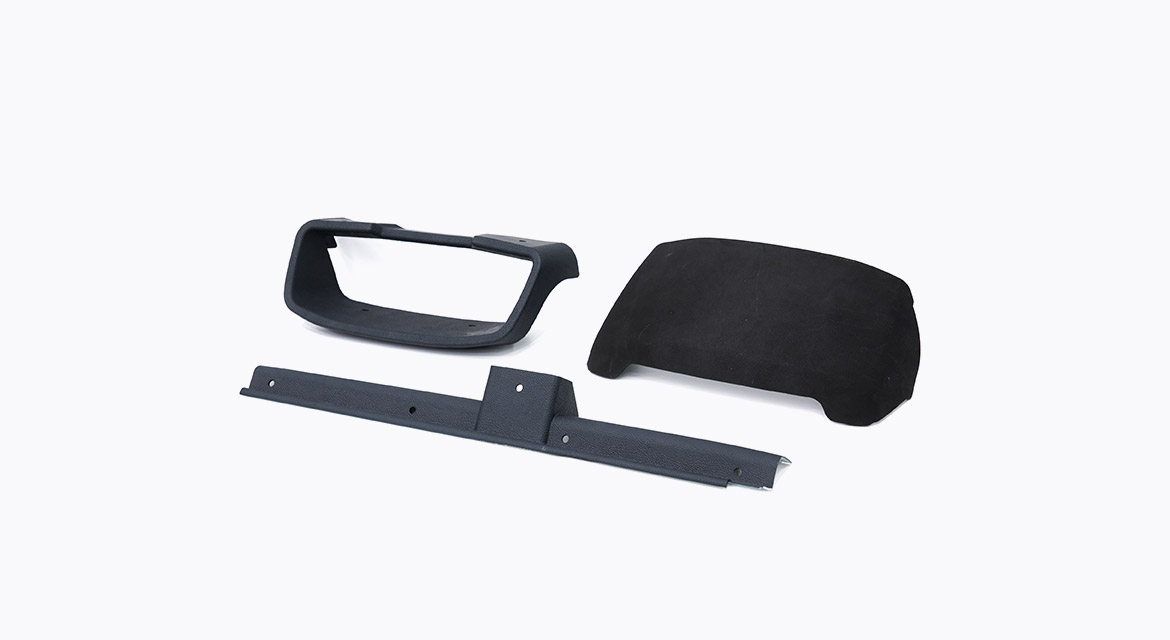
Heritage vehicle restoration represents another important application area. Engineers recreate legacy components through 3D scanning, reverse engineering and additive manufacturing, as demonstrated by a Hyundai Pony side-sill component that was digitally reconstructed and reproduced with authentic surface finishing.
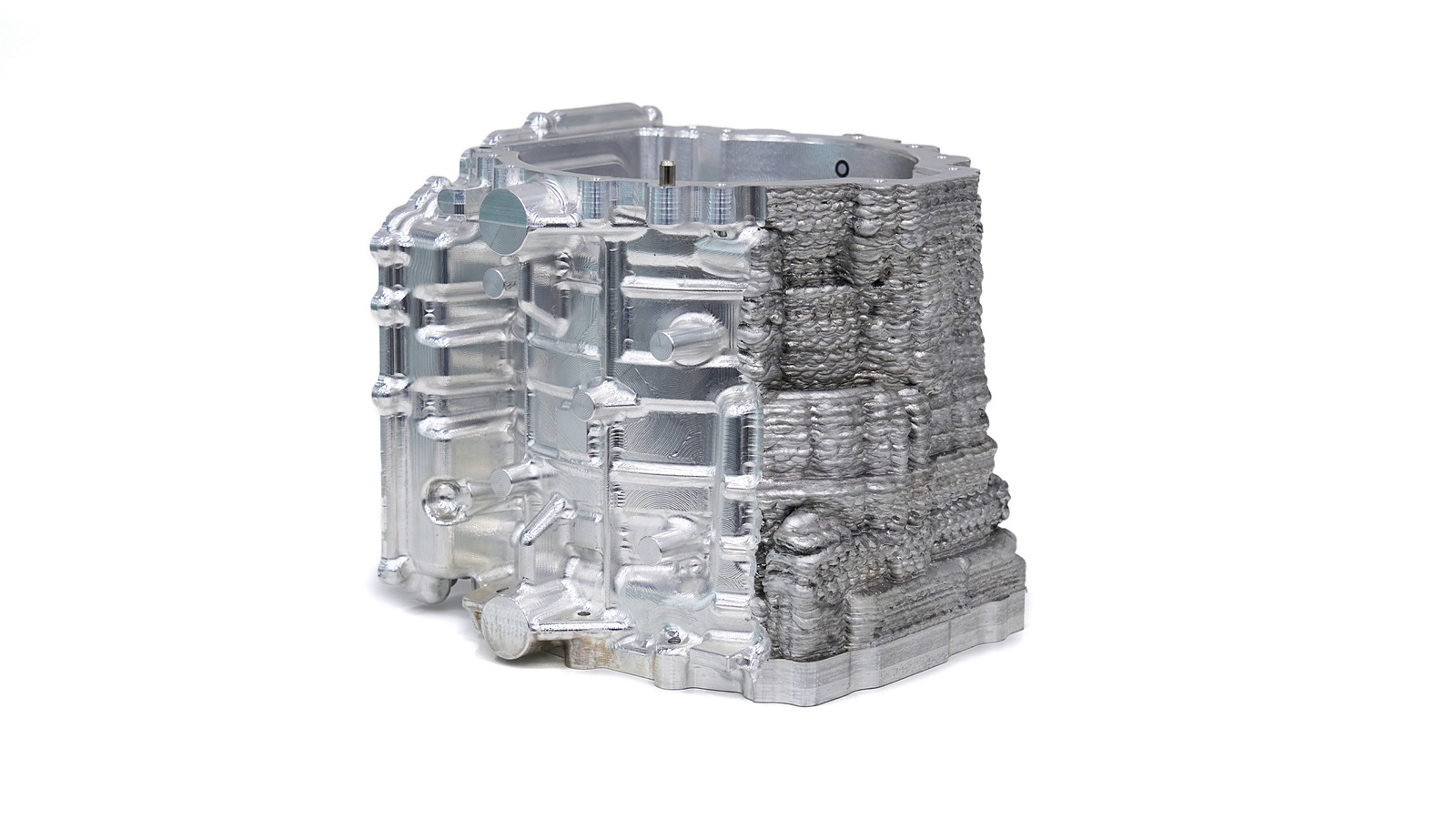
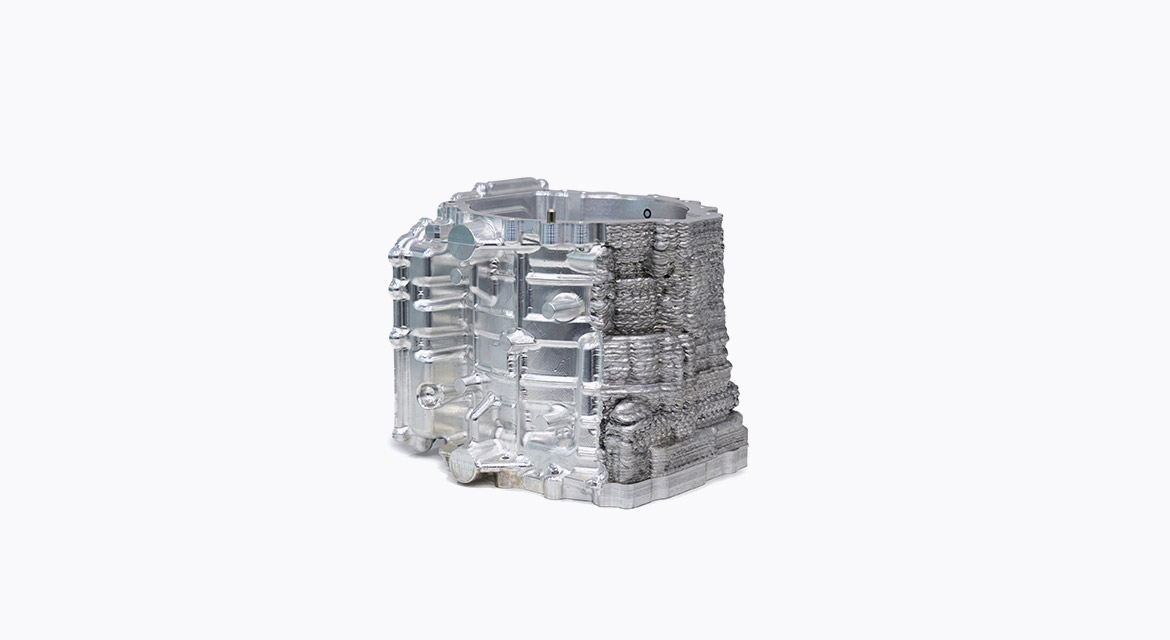
The technology is also supporting Hyundai Motor’s motorsports activities. Components such as anti-roll bar blades, damper brackets and brake duct rails are being produced using additive manufacturing to achieve the combination of lightweight construction and structural rigidity required in racing environments. The center also showcased a vehicle motor housing featuring both its as-printed DED-WAAM structure and its post-processed computer numerical control (CNC)-machined finish, demonstrating how complex metal components can be produced and refined through additive manufacturing workflows.
As Hyundai Motor and Kia’s additive manufacturing hub, the AMSC will anchor the Group’s manufacturing competitiveness for years to come. The center’s integrated capabilities — spanning design, production, post-processing and validation — position it as a key hub for expanding additive manufacturing across Hyundai Motor Group.
We are rapidly internalizing additive manufacturing technologies through a growing range of applications across the Group. Beyond vehicle components, we are expanding their use in high-value applications such as equipment consumables and manufacturing tools.
Senior Manager of the Additive Manufacturing Solutions Team
The AMSC proves that Hyundai Motor and Kia can physically build whatever its designers imagine. But as modern cars shift toward software-defined vehicles (SDVs), the hardware is only half the battle.
In the final part of the series, we step inside the NOVA Lab to see how engineers test and validate a vehicle’s electrical architecture before a physical prototype ever hits the track.
This article is part of a series on Hyundai Motor Group’s digital R&D infrastructure at the Namyang Research and Development Center. Four facilities — the Driving Simulator, Digital Measuring Center, Additive Manufacturing Solution Center and NOVA Lab — exemplify Hyundai Motor and Kia’s transformation from prototype-intensive development to digital-first validation, accelerating innovation while elevating quality and performance standards.
Daehyun Shin
daehyun.shin@hyundai.com
Global PR Contents · Hyundai Motor Company
Disclaimer: Hyundai Motor Group believes the information contained herein to be accurate at the time of release. However, the company may upload new or updated information if required and assumes that it is not liable for the accuracy of any information interpreted and used by the reader.
About Hyundai Motor Group
Hyundai Motor Group is a global enterprise that has created a value chain based on mobility, steel, and construction, as well as logistics, finance, IT, and service. With about 250,000 employees worldwide, the Group’s mobility brands include Hyundai, Kia, and Genesis. Armed with creative thinking, cooperative communication and the will to take on any challenges, we strive to create a better future for all.
More information about Hyundai Motor Group can be found at: http://www.hyundaimotorgroup.com or Newsroom: Media Hub by Hyundai, Kia Global Newsroom, Genesis Newsroom
1.6 MB
1.5 MB
2.2 MB
1.6 MB